
A Love Song That Whispered Intimacy Into the Noise of the Glam Rock Era
When David Essex released “Hold Me Close” in 1975, the song quickly climbed to No. 1 on the UK Singles Chart and became one of the defining moments of his career. Featured later on the album “All the Fun of the Fair,” the record arrived during a fascinating transition in British popular music, when glam rock’s theatrical swagger was beginning to soften into something more reflective and emotionally exposed. Essex, already known for his magnetic screen presence and youthful charisma, suddenly revealed another dimension here: vulnerability. In a decade crowded with glitter, volume, and excess, “Hold Me Close” succeeded because it dared to sound personal.
There is something deceptively simple about the song. On first listen, it carries the warmth of a straightforward romantic plea, wrapped in a melodic structure so immediate it feels almost conversational. But beneath that accessibility lies the deeper ache that gave the song its staying power. Essex sings not with the detached cool of a pop idol protecting his image, but with the fragile urgency of someone terrified that closeness may vanish the moment it is finally found. That emotional contradiction is what makes the record endure.
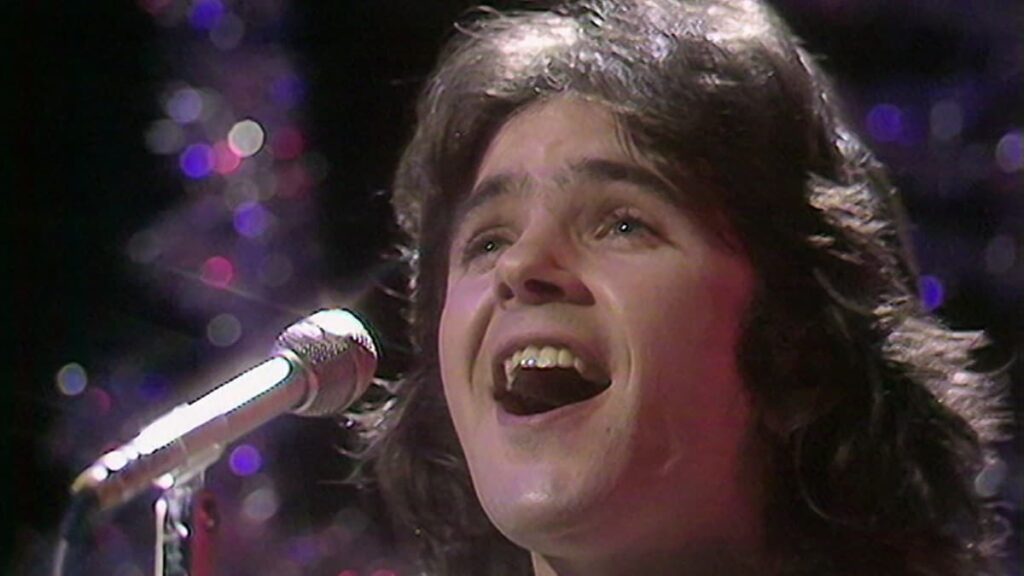
The 1975 performance on Top of the Pops captured this perfectly. British television audiences were accustomed to spectacle during that era, yet Essex stood apart because he projected intimacy rather than flamboyance. His voice did not overpower the room. It leaned into it. There was an almost cinematic softness in the way he delivered the lines, as though the song existed somewhere between a diary confession and a late-night conversation. Even today, the performance feels remarkably human compared to many chart-topping singles of the period.
Musically, “Hold Me Close” is built on restraint. The arrangement never collapses under unnecessary decoration. Instead, the rhythm section keeps a gentle pulse while the melody carries the emotional burden forward with quiet persistence. Essex understood that longing is often more powerful when understated. The pauses matter as much as the lyrics themselves. Every repetition of the title feels slightly different, moving from reassurance to desperation, from affection to fear of emotional distance.
What also distinguished the song was its refusal to dramatize heartbreak in grandiose terms. Unlike many love songs of the 1970s that framed romance as explosive passion, “Hold Me Close” focused on emotional proximity. The title itself is not symbolic or poetic in an abstract sense. It is direct. Physical closeness becomes emotional survival. That simplicity allowed listeners to project their own lives into the song. Couples heard tenderness. Lonely listeners heard hope. Those facing separation heard quiet panic beneath the melody.
Over the decades, the song has remained one of David Essex’s most recognizable recordings because it preserved a feeling that popular music rarely captures honestly: the fragile silence between two people trying to stay connected. Time has transformed many glam-era hits into nostalgic artifacts, but “Hold Me Close” still breathes with emotional immediacy. It reminds listeners that beneath every era’s fashion, trends, and spectacle, the most enduring songs are often the ones that speak softly enough for people to recognize themselves inside them.