
A Glam-Rock Anthem That Sounded Like the Future Whispering Through the Ruins of Youth
When David Essex released “Rock On” in 1973 from the album Rock On, the record arrived like a transmission from another dimension of British pop music. It climbed to No. 3 on the UK Singles Chart before crossing the Atlantic and reaching No. 5 on the Billboard Hot 100 in America, an extraordinary achievement for a song so sparse, strange, and emotionally elusive. At a time when glam rock often exploded in glitter and theatrical excess, David Essex chose restraint. The result was not merely a hit single—it was a mood piece, a ghostly meditation on modern youth culture disguised as a pop record.
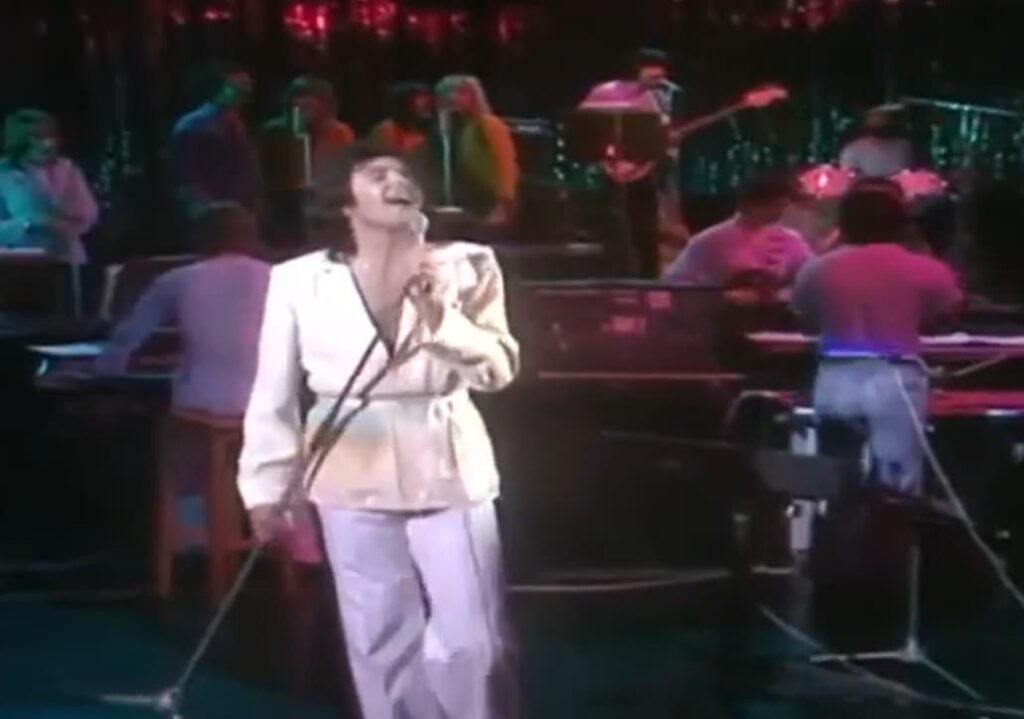
The rare live rendition often circulated among collectors and enthusiasts today carries a particular weight because “Rock On” was never a conventional stage song. In the studio version, the arrangement feels skeletal and nocturnal: muted percussion, a creeping bass line, and Essex’s half-spoken vocal drifting through the mix like a late-night monologue from someone watching the world decay beneath neon lights. Hearing it performed live strips away even more illusion and reveals how much of the song’s power depends on atmosphere rather than force. It is less sung than inhabited.
What made “Rock On” so arresting in 1973 was its refusal to behave like a traditional rock anthem despite its title. The phrase itself sounds celebratory, almost triumphant, yet the song unfolds with unease and distance. Essex was observing youth culture from inside it while simultaneously mourning it. References to James Dean and rock-and-roll mythology are not nostalgic decorations; they function as symbols of a generation already becoming memory. There is a haunting quality in the way Essex delivers lines as though he is narrating the final hours of an era that once promised rebellion but now feels exhausted and commercialized.
That tension—between glamour and emptiness—is what gives the song its enduring sophistication. The early 1970s were filled with artists reinventing identity through spectacle, but David Essex approached fame differently. He sounded fascinated by celebrity culture while also suspicious of it. “Rock On” captures that contradiction beautifully. The record pulses with coolness, yet beneath the surface there is isolation, fatigue, and a subtle fear that the machinery of pop culture consumes everyone it touches.
Musically, the track was revolutionary in its economy. Producer Jeff Wayne resisted overcrowding the arrangement, allowing silence and rhythm to become central emotional tools. The sparse instrumentation creates an urban loneliness that still feels startlingly modern decades later. Many records from the glam era now sound tied to their moment; “Rock On” somehow escaped time altogether. Its minimalist pulse would later influence artists far beyond its original context, particularly performers drawn to darker, mood-driven rock textures.
The enduring fascination with rare live performances of David Essex singing “Rock On” lies in witnessing how fragile the song truly is beneath its legend. Without studio mystique, the composition reveals itself as a deeply human reflection on disillusionment and survival. It remains one of the most quietly intelligent records of the 1970s—not because it shouted louder than its contemporaries, but because it understood something they often missed: youth fades, trends collapse, idols disappear, yet the longing to hold onto meaning through music never really leaves us.