
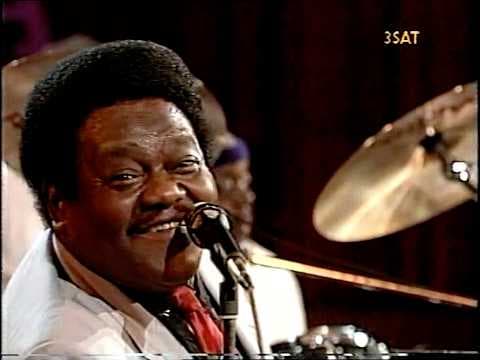
Lament Where the Weather Becomes the Heart’s Own Storm
When Fats Domino released “It Keeps Rainin’” in 1961, the record climbed to No. 23 on the Billboard Hot 100 and reached No. 4 on the R&B chart, reaffirming his standing as one of rock and roll’s most durable architects. Issued as a single and later included on his album “Let the Four Winds Blow”, the song arrived at a moment when Domino was navigating the shifting tides of early 1960s popular music. The initial explosion of 1950s rock and roll had softened, yet Domino’s touch remained unmistakable: rolling triplets on the piano, a gentle but insistent backbeat, and that warm, conversational tenor that could turn heartbreak into something communal.
The melody of “It Keeps Rainin’” traces its lineage to the traditional “Red Sails in the Sunset,” a borrowing that speaks to Domino’s gift for reinterpreting older musical currents through a New Orleans lens. With longtime collaborator Dave Bartholomew shaping the production, the track becomes less a simple cover or adaptation and more a transformation. The Caribbean lilt beneath the rhythm section, the subtle horn arrangements, and Domino’s relaxed phrasing create a mood that feels humid and heavy, as if the air itself carries sorrow.
Lyrically, the rain is not mere atmosphere. It is persistence. It is memory that refuses to evaporate. Domino does not howl his grief; he endures it. The refrain suggests a man who understands that heartbreak is not a sudden downpour but a steady, soaking drizzle. The sky remains overcast long after the storm should have passed. In Domino’s delivery, there is resignation but not despair. His voice, rounded and unhurried, implies that this rain has fallen before and will fall again. The tragedy is cyclical, almost seasonal.
What elevates the song beyond a conventional tale of romantic loss is its tonal paradox. The groove is buoyant, almost deceptively cheerful. Domino’s piano dances even as the lyrics dwell on absence. This contrast was always central to his artistry. He specialized in turning melancholy into something you could sway to. In “It Keeps Rainin’”, the emotional tension between rhythm and lyric mirrors the human condition itself: we carry on, we tap our feet, we find warmth in community, even while private storms gather overhead.
In the broader arc of Domino’s career, the song represents a bridge between eras. It does not have the raw immediacy of “Blueberry Hill” nor the youthful urgency of his earliest hits, but it possesses a reflective maturity. By 1961, Domino was no longer the insurgent of the jukebox; he was a statesman of sound. And in this recording, he demonstrates that rock and roll could age gracefully, absorbing older melodies and deeper emotions without losing its pulse.
For those who return to the vinyl decades later, the gentle hiss before the piano enters feels almost like distant thunder. Then the rhythm settles in, steady as rainfall. And once again, the storm begins.