
Love So Effortless It Becomes a Declaration of Independence
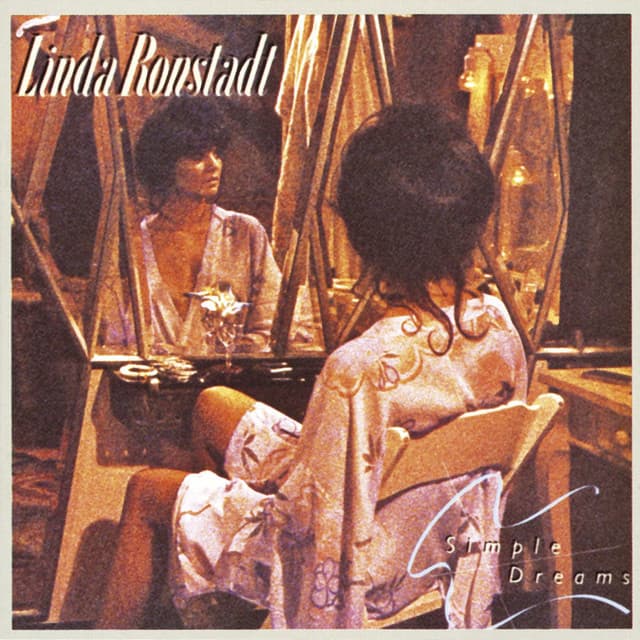
Released in 1977 as a single from Simple Dreams, “It’s So Easy” by Linda Ronstadt surged to No. 5 on the Billboard Hot 100 and became one of the defining hits of her career. The album itself topped the Billboard 200, confirming Ronstadt not merely as a successful interpreter of songs, but as a commanding force in the late-1970s American pop landscape. In an era crowded with singer-songwriters baring their souls, Ronstadt chose a different path: she found other writers’ material and inhabited it so completely that it seemed born from her own pulse.
Originally written and recorded by Buddy Holly in 1958, the song had the skeletal simplicity of early rock and roll. Holly’s version carried a buoyant innocence, its clipped phrasing and bright rhythm suggesting a young man astonished by the ease of infatuation. When Ronstadt revisited the song nearly two decades later, she did not merely modernize it; she electrified it. The arrangement on Simple Dreams, produced by Peter Asher, leans into a sharper, more muscular pop-rock texture. Guitars snap with confidence, the rhythm section drives with polished precision, and over it all Ronstadt’s voice cuts through like a blade wrapped in velvet.
Her vocal performance is the axis on which the song turns. Ronstadt does not treat the lyric as naïve confession. She sings, “It’s so easy to fall in love,” with a tone that is at once playful and authoritative, as though love is less a surprise than a choice she makes deliberately. The repeated refrain becomes less about helpless surrender and more about the joy of emotional clarity. In her hands, simplicity is not immaturity; it is certainty.
This was the paradox of Ronstadt’s artistry. She built a career not primarily on self-written material but on interpretive mastery. In the 1970s she moved fluidly between country-rock, pop, and even the Great American Songbook in later years, yet she always sounded unmistakably herself. With “It’s So Easy,” she demonstrates how a three-minute pop song can contain both lightness and strength. The phrasing is immaculate, the control exacting, yet there is an undercurrent of abandon that keeps the performance alive.
Culturally, the song marked a moment when female rock vocalists were asserting dominance on mainstream charts without sacrificing melodic accessibility. Ronstadt stood alongside contemporaries yet apart from them, her commercial success reinforcing that interpretive excellence could be as culturally significant as authorship.
More than four decades later, “It’s So Easy” endures not because of lyrical complexity, but because of emotional immediacy. In Ronstadt’s voice, love is neither tortured nor ironic. It is direct. It is fearless. And, for three incandescent minutes, it truly feels easy.