
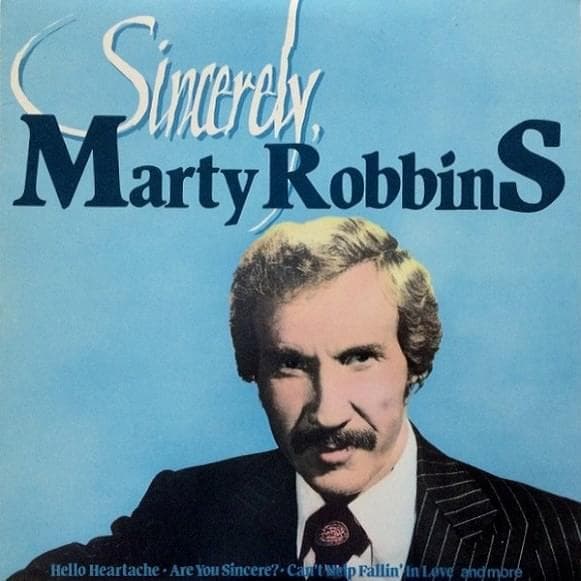
A Heart Torn Between Love’s Memory and Reality
When If You See My Heart Today emerged in the catalogue of Marty Robbins, it stood as a plaintive plea — a tremulous cry from a soul struggling to let go. Though never ranked among his biggest chart-smash hits, the song remains a gem within his oeuvre, carried by Robbins’ unerring vocal tenderness. It resurfaced on compilations and live collections, sustaining its quiet power long after its initial release.
Born amid the swirl of love, regret, and longing, If You See My Heart Today reveals itself as a ghost-singer’s confession. The track, penned by songwriter Joe T. Babcock, finds Robbins at his most vulnerable: begging an unnamed friend to intercept the errant course of his own heart. He asks that if — on some lonesome road — the friend should “see his heart today,” they might gently warn it of the folly of chasing someone destined to bring only pain. The heart, Robbins admits, refuses to heed his warning; it wanders regardless, entranced by love’s memory more than its reason.
What makes the song so affecting is its framing of heartbreak not as a spectacle of rage or bitterness, but as an internal fracture: the lived experience of loving someone more than one should, of knowing the truth yet unable to detach from desire. Lines like “my heart is gone astray — it won’t listen to my warning plea” strike at the core of that all-too-familiar conflict between head and heart. The repeated refrain — “If you see my heart today” — becomes a haunting wish: that someone else might intervene, might steady the heart’s wandering or at least carry the truth to it.
Musically, Robbins’ delivery undercuts any sense of false bravado. His voice hovers between resignation and hope, a tremor in every note that suggests the battle within. The arrangement is sparse, respectful — just enough accompaniment to frame the vocal, letting the lyrics breathe. In that economy lies its power: the spaces between words feel heavy with unspoken grief.
Though not stamped into the annals of country radio hits like “El Paso” or “Big Iron,” If You See My Heart Today endures as a quieter kind of classic — one that doesn’t demand attention, but rewards the listener who leans in. It is a testament to Robbins’ artistry: the ability to carry heartbreak not as spectacle, but as truth. In doing so, the song invites a rare intimacy, as though Robbins is confiding something he cannot say aloud, but hopes will find its way to someone who understands.
In the larger arc of Robbins’ career — marked by epic ballads, Western narratives, shifting styles — this song stands apart: not for its grandeur, but for its honesty. It is the sound of love resisting logic; of heart and memory refusing to let go. And in that resistance, we find a painful beauty that lingers long after the last chord fades.