
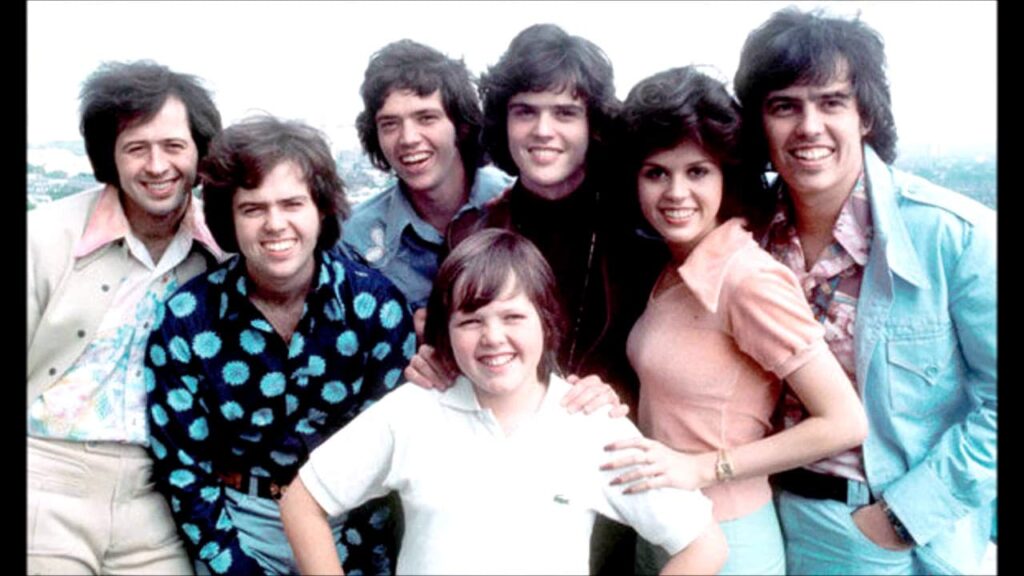
A Song About Devotion That Refused to Sound Fashionable, Even in the Middle of the Glam Era
When The Osmonds performed “The Proud One” on British television during their 1975 appearance on Top Of The Pops, they were carrying a song that had already become one of the group’s significant international hits. Released on the album “The Proud One”, the single climbed into the UK Top 5 and further confirmed the remarkable staying power of a family act that many critics had once dismissed as merely teen-idol entertainment. Yet by the mid 1970s, the Osmonds had become something more complicated than that. They stood at an unusual crossroads where polished pop craftsmanship, American family wholesomeness, and increasingly emotional songwriting all collided against the louder, flashier landscape of glam rock and hard-edged arena music.
What makes “The Proud One” endure is not extravagance. In fact, its power comes from the exact opposite. The song is built around emotional restraint. It speaks with the voice of someone who cannot fully articulate vulnerability, so he transforms devotion into a quiet vow. The narrator does not plead dramatically. He does not threaten departure or collapse into heartbreak. Instead, he offers identity itself as proof of love. To be “the proud one” is to stand beside another person with unwavering certainty, even when tenderness feels difficult to express openly.
That emotional posture fit The Osmonds more deeply than many listeners realized at the time. By 1975, the group had already experienced the dizzying machinery of global fame. They had survived the fever of screaming audiences, relentless television exposure, and the exhausting pace that often consumes young performers before adulthood ever properly begins. Unlike many acts born from early 1970s pop hysteria, however, the Osmonds gradually pushed toward more mature material without entirely abandoning the melodic accessibility that first made them famous.
The televised performances of “The Proud One” captured this transition beautifully. On stage, there was still polish, still choreography, still the unmistakable sheen of network-era entertainment. But underneath it sat something more grounded. Donny Osmond’s vocal delivery carried a sincerity that resisted irony. In an age increasingly fascinated with theatrical excess, the Osmonds remained strangely committed to emotional directness. That sincerity became their strength and, in some circles, their burden. Rock critics of the era often favored rebellion, danger, or cynicism. The Osmonds instead offered earnestness without embarrassment.
Musically, the song leans into soaring harmonies and carefully layered orchestration that echo the grand romantic pop tradition of the late 1960s while also anticipating the soft-rock emotionalism that would dominate much of adult contemporary radio later in the decade. The arrangement never rushes. It allows the chorus to bloom gradually, almost like a confession finally escaping someone who has spent too long trying to appear composed.
Viewed decades later, “The Proud One” feels less like a relic of teen pop and more like a document of emotional loyalty from a disappearing musical era. It belongs to a time when vulnerability in mainstream pop music could still arrive without sarcasm or self-protection. The Osmonds were often underestimated because they looked too clean-cut, too polished, too safe for a culture obsessed with rebellion. Yet songs like this reveal another truth entirely. Beneath the bright television lights and carefully managed image stood performers trying to communicate devotion with genuine conviction.
That is why the 1975 television performances still resonate. They preserve a fleeting moment when pop music could be elegant, sentimental, and emotionally exposed without apology.