
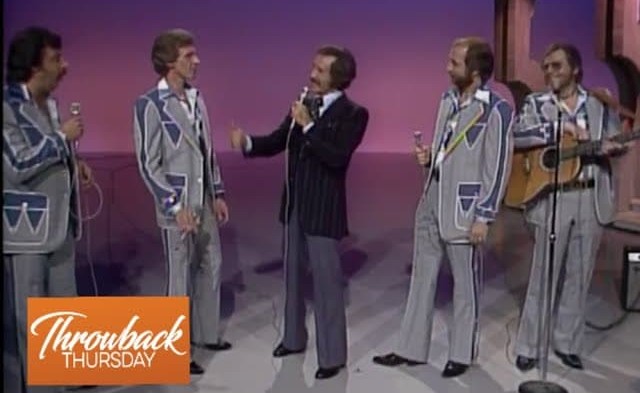
A gathering of storytellers and harmonists where tradition feels alive, familiar, and deeply rooted in the shared language of country music
When The Statler Brothers joined Marty Robbins on The Marty Robbins Show, the result was more than a television performance. It was a convergence of some of country music’s most enduring traditions. By this stage in their careers, Marty Robbins had already established himself as one of the genre’s definitive narrative voices through landmark recordings tied to albums such as Gunfighter Ballads and Trail Songs, while The Statler Brothers had become masters of harmony-driven storytelling, balancing gospel roots, humor, nostalgia, and emotional sincerity through a remarkable run of chart success. Together, they created an atmosphere that reflected country music not merely as entertainment, but as cultural memory passed from voice to voice.
What immediately distinguishes these performances is warmth. Unlike highly choreographed television productions built around spectacle, The Marty Robbins Show often felt intimate and conversational, allowing personalities and musical chemistry to shape the experience naturally. This environment suited both Robbins and The Statlers perfectly. Their artistry depended less on theatrical display and more on connection, timing, and emotional authenticity.
Vocally, the contrast between the artists creates extraordinary balance. Marty Robbins carried a smooth, controlled clarity that gave every lyric narrative focus. His voice often felt cinematic, capable of turning even simple lines into vivid emotional scenes. The Statler Brothers, meanwhile, approached music collectively rather than individually. Their harmonies functioned almost like a single instrument, blending precision with warmth in a way few vocal groups could achieve. Together, the combination creates a layered emotional texture where storytelling and harmony reinforce one another beautifully.
Musically, the performances reflect the elegance of classic country television arrangements. Instrumentation remains polished yet restrained, allowing the voices to remain central. Acoustic textures, steady rhythms, and traditional country phrasing create a setting where the songs unfold naturally rather than being overwhelmed by production excess. This simplicity becomes part of the emotional power.
Thematically, both Marty Robbins and The Statler Brothers shared a deep understanding of nostalgia, though they approached it differently. Robbins often explored memory through personal storytelling and western imagery, while The Statlers frequently rooted their songs in family, small-town identity, faith, and generational continuity. When these sensibilities intersect on stage, the result feels deeply grounded in American musical tradition.
There is also an important cultural dimension to these appearances. During the era of programs like The Marty Robbins Show, country television served as a communal gathering space where artists from different stylistic corners of the genre could interact organically. These performances preserved continuity within country music at a time when the industry itself was evolving rapidly.
Watching The Statler Brothers alongside Marty Robbins also reveals something increasingly rare in modern entertainment. Ease. There is no visible struggle for attention, no manufactured tension, no forced reinvention. The artists trust the songs, trust each other, and trust the audience’s willingness to listen carefully.
What lingers after the performance concludes is not simply admiration for vocal excellence, but affection for the atmosphere itself. The feeling of musicians genuinely enjoying the act of making music together. That sincerity becomes inseparable from the performance’s emotional impact.
And gathered beneath the studio lights of The Marty Robbins Show, The Statler Brothers and Marty Robbins remind us why classic country music continues to endure. Because at its best, it does not merely entertain. It preserves voices, values, memories, and the quiet human truths carried within them.