
A wordless lament where the steel guitar becomes the voice of memory itself
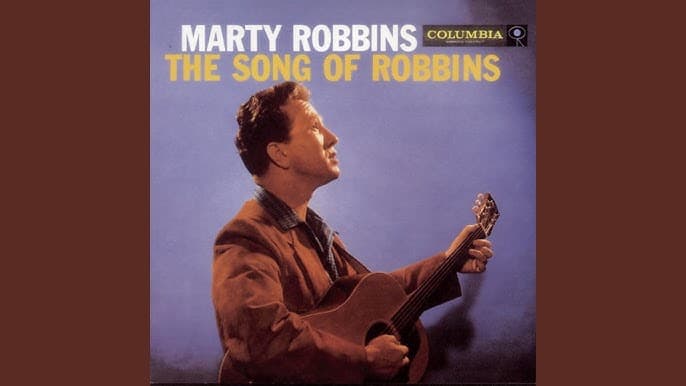
Upon its release in 1960, Crying Steel Guitar Waltz arrived quietly, without a push toward the singles charts, nestled instead within More Gunfighter Ballads and Trail Songs, an album that extended Marty Robbins’ remarkable run as one of country music’s most commercially and artistically reliable figures. The record followed the massive success of his original Gunfighter Ballads project and reinforced his dominance on the country album landscape of the era, even as this particular track resisted the usual metrics of chart ambition. It was not designed to compete for radio countdowns. It was designed to endure.
Crying Steel Guitar Waltz stands apart in Robbins’ catalog precisely because it abandons narrative lyrics in favor of something older and arguably more honest. The steel guitar, long associated with heartbreak and distance, assumes the role of storyteller. In a genre built on words, Robbins trusted tone, phrasing, and restraint. The waltz tempo moves with deliberate patience, echoing the slow rotation of memory rather than the forward drive of plot. Each sustained note feels suspended in time, as if the instrument itself is pausing to consider whether it should continue speaking at all.
There is no confirmed anecdote that explains a specific moment of composition, and none is required. The emotional clarity of the piece suggests a synthesis rather than a confession. Robbins had already mastered the art of cinematic storytelling through song, particularly in his Western ballads. Here, he applies that same cinematic instinct to pure sound. The steel guitar weeps, but never collapses. Its sorrow is controlled, dignified, and deeply adult. This is not the heartbreak of youth. It is the resignation that follows experience.
The waltz structure matters. Three time has always carried an inherent melancholy, a sense of circular motion rather than escape. In Crying Steel Guitar Waltz, that circularity becomes symbolic. The melody returns to itself again and again, subtly altered, as if revisiting the same memory from different angles over the years. The arrangement leaves space between phrases, allowing silence to participate. Robbins understood that silence can be as expressive as melody, particularly when the subject is loss.
Culturally, the track reinforces Robbins’ role as a bridge between country tradition and refined musical storytelling. At a time when Nashville production was becoming more polished, he demonstrated that sophistication did not require excess. The piece honors the steel guitar’s roots while elevating it to something almost orchestral in emotional scope. It speaks to listeners who have lived long enough to recognize that not every feeling demands explanation.
Crying Steel Guitar Waltz remains one of those recordings that vinyl collectors return to late at night, when words feel inadequate and memory does the talking. It is not a song that asks for attention. It waits. And when it finally reaches the listener, it does so with the quiet authority of truth that has already been lived.