
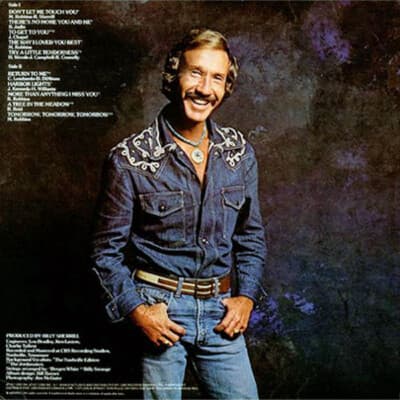
A quiet confession of restraint, where desire is strongest precisely because it is denied.
Upon its release in the early 1960s, Don’t Let Me Touch You became a significant country hit, rising into the Top Five of the Billboard country chart and reinforcing Marty Robbins as one of the genre’s most emotionally articulate voices. The song appeared on More Greatest Hits, an album that captured Robbins during a period when commercial success and artistic maturity were moving in tandem. At a time when country music often leaned toward overt heartbreak or swaggering confidence, Robbins delivered something far more restrained and unsettling, a song built not on action, but on self control.
The power of Don’t Let Me Touch You lies in its inversion of the typical love song dynamic. Rather than pleading for closeness, the narrator begs for distance. This is not rejection, but survival. Robbins frames desire as something dangerous, almost combustible, suggesting that physical contact would fracture an already fragile emotional balance. The lyric is steeped in awareness. This is a man who knows his limits and fears crossing them. In country music, where longing is often dramatized through pursuit, Robbins chooses restraint as the ultimate expression of sincerity.
Musically, the arrangement mirrors this tension. The tempo is measured, never rushing toward release. The instrumentation stays disciplined, allowing space between phrases, as if the song itself is holding its breath. Robbins’ voice remains calm, but beneath that calm is a tremor of vulnerability. His phrasing lingers just long enough to suggest temptation, then pulls back. Each line feels weighed before it is sung, reinforcing the idea that every word, like every touch, carries consequences.
This song also reflects a broader theme in Robbins’ catalog. While he is often remembered for cinematic gunfighter ballads or sweeping romantic epics, his quieter recordings reveal an artist deeply attuned to emotional nuance. Don’t Let Me Touch You belongs to that introspective lineage. It presents love not as conquest, but as moral responsibility. The narrator understands that desire does not automatically justify action. That awareness gives the song its aching dignity.
Culturally, the track resonates because it acknowledges a truth rarely spoken plainly in popular music. Sometimes the most honest act of love is restraint. Robbins does not moralize or dramatize this realization. He simply states it, calmly and painfully, trusting the listener to feel its weight. This subtlety is why the song endures. It does not rely on melodrama or spectacle. Instead, it invites reflection.
Listening now, decades removed from its chart success, Don’t Let Me Touch You feels timeless. It captures a moment when country music allowed silence to speak, when emotional maturity could be expressed through what was left unsaid. In the hands of Marty Robbins, restraint becomes its own form of passion, and the song stands as a quiet testament to the power of knowing when not to reach out.