
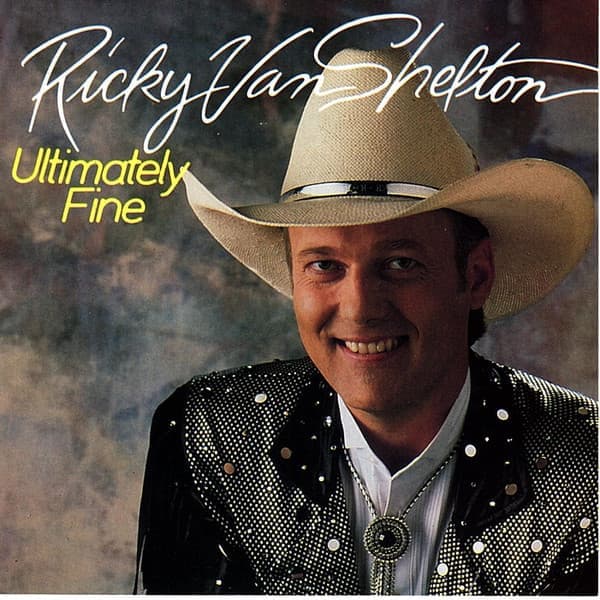
A quiet farewell disguised as resilience, where heartbreak learns to speak in calm acceptance
When Ricky Van Shelton released Ultimately Fine as part of his 1990 album RVS III, the song reflected the polished yet emotionally grounded country sound that defined his most successful years. While not among his major chart-topping singles, the track exists within a period when Shelton consistently placed songs on the Billboard Hot Country Singles chart, reinforcing his reputation as one of the most reliable traditionalist voices of the era. Within the framework of RVS III, Ultimately Fine feels less like a commercial statement and more like a personal confession tucked between more radio-driven material.
At its core, Ultimately Fine is a study in emotional restraint. Where many country ballads lean into overt sorrow, Shelton’s delivery suggests something far more complex: a man attempting to convince himself that time will heal what the present cannot. The title itself carries a subtle ambiguity. “Fine” is not triumph, nor is it devastation. It is survival. It is the quiet, almost reluctant acceptance that follows emotional upheaval.
Shelton’s vocal approach is crucial to the song’s enduring resonance. Known for his smooth baritone and unembellished phrasing, Ricky Van Shelton avoids dramatics here. Instead, he leans into understatement, allowing small inflections to carry the emotional weight. This stylistic choice aligns with the traditions of classic country storytelling, where the most devastating truths are often delivered with composure rather than collapse. In Ultimately Fine, that composure becomes the narrative itself.
The arrangement mirrors this emotional architecture. Gentle instrumentation supports rather than dominates, creating space for reflection. There is a deliberate absence of excess, a refusal to overwhelm the listener with orchestration. This restraint allows the listener to focus on the internal dialogue embedded within the lyrics. Each line feels like a step forward, hesitant but necessary, as though the singer is walking himself through the process of letting go.
Lyrically, the song occupies a space between denial and acceptance. It does not dramatize heartbreak as an irreversible tragedy. Instead, it frames it as a passage of time. The future tense implied in the title suggests healing not as an immediate reality, but as a distant certainty one chooses to believe in. This perspective resonates deeply within the broader landscape of country music, where themes of loss, endurance, and quiet dignity often intersect.
In the context of RVS III, Ultimately Fine serves as a reminder of what made Ricky Van Shelton such a compelling figure in late 20th-century country music. He did not rely on stylistic reinvention or crossover ambition. Instead, he refined a sound rooted in tradition and sincerity. Songs like this reveal the subtle artistry behind that approach. They are not built for spectacle. They are built for recognition.
Years later, Ultimately Fine lingers not as a declaration of strength, but as a reflection of it. It captures the moment when pain has not yet faded, but the resolve to endure has already taken hold. In that quiet space between hurt and healing, the song finds its lasting truth.