
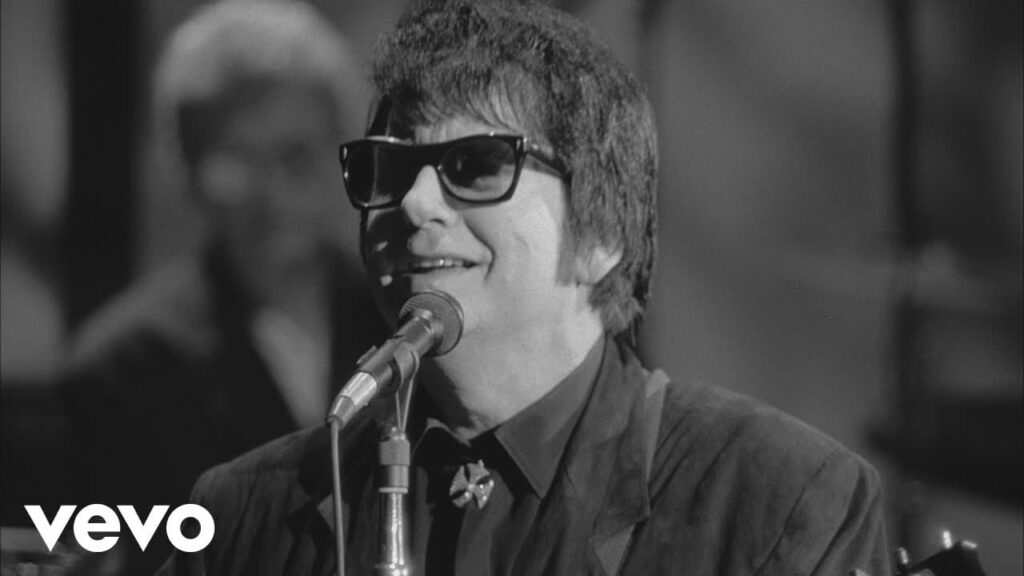
A Love Song That Carried Roy Orbison Back Into the Light
When Roy Orbison performed “Claudette” during the sessions later released as Black & White Night 30, he was not merely revisiting an old rock-and-roll hit—he was reclaiming a fragment of his own history. The alternate version, officially issued in 2017 as part of the expanded anniversary release of Black & White Night 30, emerged from the now-legendary “secret post-show” recordings captured after the audience had already left the Cocoanut Grove in Los Angeles. Unlike the original 1958 recording—which became a major hit for The Everly Brothers, reaching No. 1 on the UK Singles Chart and helping establish Orbison as a songwriter of uncommon emotional clarity—this later performance feels older, wiser, and touched by memory itself.
There is something profoundly moving about hearing Roy Orbison sing “Claudette” in the twilight of his career. Written for his first wife, Claudette Frady Orbison, the song was born in the bright optimism of young love. In its earliest incarnation, it was a lean rockabilly declaration—quick-footed, playful, almost innocent in the way 1950s love songs often were. Yet time transformed the song. By the era of Black & White Night, Orbison no longer sounded like a young man trying to impress the world. He sounded like someone who had survived it.
That distinction changes everything.
The alternate version strips away any remaining sense of youthful haste. Instead, the performance breathes. The legendary backing ensemble—including musicians and admirers such as Bruce Springsteen, Elvis Costello, and members of Elvis Presley’s famed TCB Band—does not overpower the song. They frame Orbison carefully, almost reverently, as though everyone in the room understood they were witnessing not nostalgia, but testimony.
And testimony is precisely what this rendition becomes.
To understand the emotional gravity of “Claudette,” one must remember the tragedies that shaped Orbison’s life. Claudette herself died in a motorcycle accident in 1966, a loss from which Orbison never fully recovered. Years later, hearing him return to the song creates an almost unbearable tension between lyric and history. What once sounded flirtatious now feels haunted by devotion and grief. The line between performance and remembrance dissolves completely.
Vocally, Orbison remains astonishing. Age had roughened certain edges of his voice, but it also deepened its authority. Few singers in popular music history possessed such command over vulnerability. He could make heartbreak sound operatic without ever losing intimacy. In this alternate take of “Claudette,” he avoids melodrama entirely. Instead, he sings with the quiet certainty of a man carrying decades inside every phrase.
That may be why Black & White Night 30 endures as more than a concert film or archival curiosity. It captures an artist standing at the intersection of past and legacy. The alternate performances released decades later feel especially intimate because they were never originally intended for grand presentation. They possess the looseness of musicians playing after hours, yet within that looseness lies extraordinary emotional truth.
In the end, “Claudette” is no longer simply a love song from the golden age of rock and roll. In Orbison’s hands, especially here, it becomes something rarer: a conversation with memory itself.