
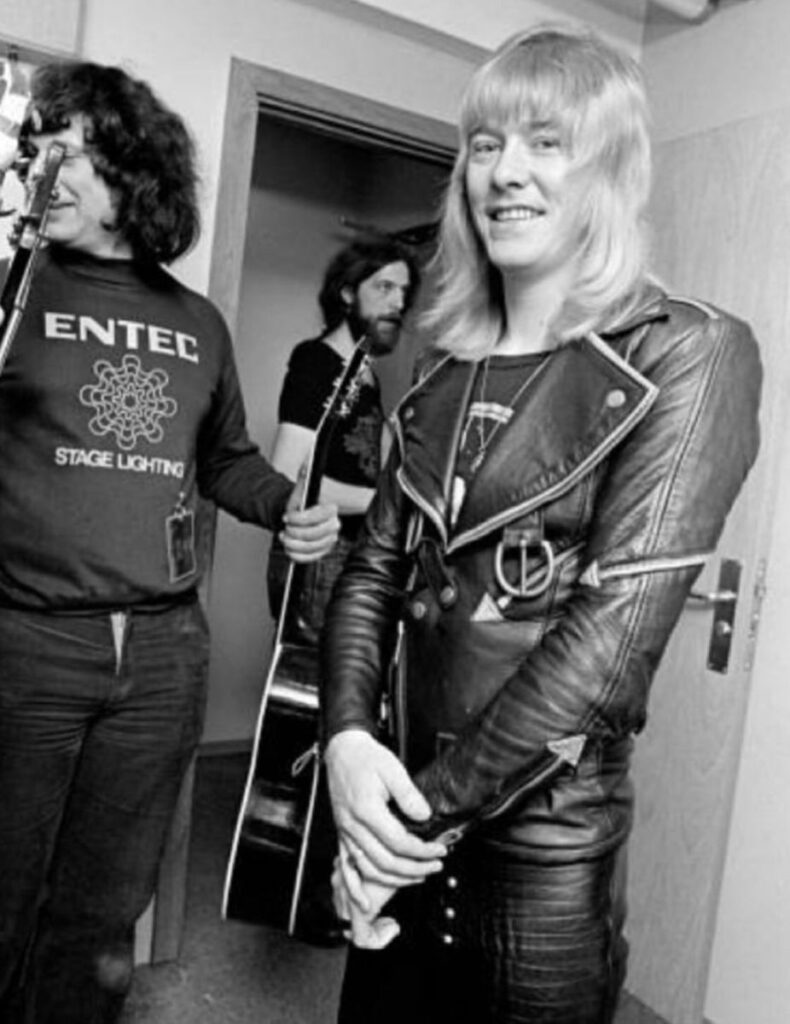
Soul in Suspension, Waiting for Redemption at Dawn
When Brian Connolly released “Wait ’Til The Morning Comes” in 1980, it marked a fragile yet determined chapter in a life already etched with triumph and turmoil. Issued as a single from his solo album Brian Connolly, the record did not storm the upper reaches of the UK charts as his earlier work with The Sweet had done in the glam rock era. Yet chart placement tells only a fraction of the story. What mattered more was the symbolism: this was Connolly stepping into the light alone, without the bombast and glitter that had once defined his public image.
By 1980, Connolly’s voice carried more than melody. It carried history. During his tenure with The Sweet in the early and mid 1970s, he had become one of the most recognizable frontmen in British rock, his high, elastic tenor soaring over hits that blended hard rock with theatrical flair. But years of personal struggle and professional fracture had taken their toll. His departure from the band in 1979 left him at a crossroads. “Wait ’Til The Morning Comes” emerged from that intersection of uncertainty and defiance.
The song itself feels like a quiet manifesto. Its lyrical core revolves around endurance, the promise that darkness is temporary, that emotional night yields eventually to daybreak. Connolly sings not with the youthful bravado of glam’s heyday, but with a tempered vulnerability. There is an undercurrent of weariness in his phrasing, yet also a stubborn glint of hope. The arrangement reflects this duality: polished pop-rock instrumentation supports a melody that is both accessible and introspective. It is less flamboyant than his past recordings, more measured, almost contemplative.
What makes the track compelling is how it reframes Connolly’s public narrative. In the glam era, spectacle often eclipsed subtlety. Here, subtlety becomes the point. The performance suggests a man aware of his own fragility, yet unwilling to relinquish the stage. The refrain, anchored by its promise of morning, resonates as both romantic reassurance and personal affirmation. It speaks to lovers weathering conflict, yes, but also to an artist navigating the long shadow cast by former glory.
In retrospect, “Wait ’Til The Morning Comes” occupies a poignant place in Connolly’s catalog. It did not redefine the charts, but it redefined the man. For listeners attuned to nuance, the song stands as a document of resilience. It captures the moment when a celebrated voice, stripped of glitter and spectacle, chose to trust that another dawn was possible.