
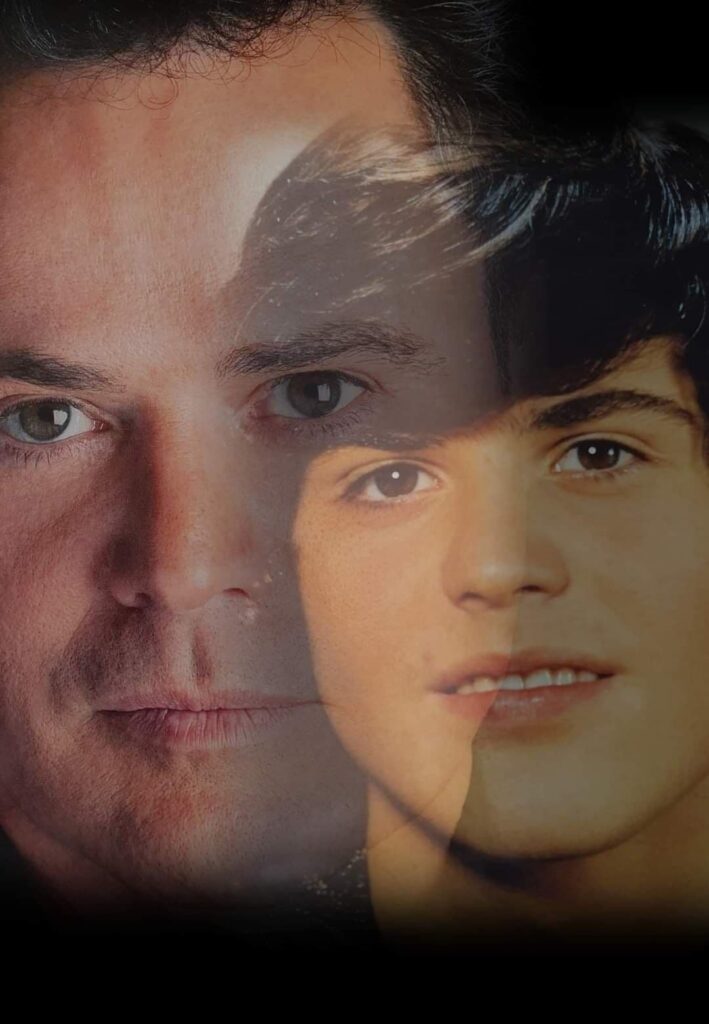
Tender vow whispered against the fear of heartbreak, where innocence dares to believe in forever.
Released at the height of teen idol fervor, “When I Fall In Love” by Donny Osmond became one of the defining statements of his early solo career. Issued in 1973 as part of the album Alone Together, the single climbed into the UK Top 5 and reached the Top 20 on the US Billboard Hot 100, reaffirming Osmond’s remarkable popularity on both sides of the Atlantic. At a time when pop was splintering into glam, soul, and singer-songwriter confessionals, this classic standard—already immortalized in earlier decades—found new life in the hands of a young voice not yet fully weathered by experience.
Originally written by Victor Young and Edward Heyman in 1952, the song carries a melodic architecture of almost aching restraint. Its chord progression rises and resolves with deliberate patience, mirroring the lyric’s central promise: love must be absolute or it is nothing at all. In Osmond’s interpretation, that promise becomes less a seasoned declaration and more a hopeful creed. His youth is not a limitation; it is the lens through which the song’s sincerity is magnified. There is no irony, no guarded detachment. Every phrase feels delivered with the earnest conviction of someone who still believes that love, once chosen, should last “forever.”
The early 1970s were a curious moment for such a ballad. The cultural air was thick with skepticism—post–Summer of Love disillusionment, shifting social norms, and a growing appetite for realism in songwriting. Yet here was Donny Osmond, standing almost defiantly in purity, offering a vision of romance untouched by cynicism. His phrasing is careful, nearly reverent, especially in the lines that pledge permanence. He does not oversing. Instead, he leans into the melody’s natural rise, allowing the orchestra to cradle his voice rather than compete with it. Strings swell gently, framing the vocal in a halo of sentimentality that feels unabashed and sincere.
What makes this rendition endure is not technical virtuosity but emotional transparency. The lyric insists on patience—“it will be completely”—and Osmond’s performance honors that restraint. He stretches certain vowels just enough to let longing linger in the air, as if aware that love, once spoken aloud, becomes both a promise and a vulnerability. In this reading, the song is less about falling and more about waiting: waiting for certainty, for maturity, for a love worthy of irrevocable devotion.
Over decades, “When I Fall In Love” has been interpreted by many, but Osmond’s version remains a time capsule of youthful idealism at its commercial zenith. It captures a fleeting intersection: a teenage star navigating adulthood, and a generation momentarily willing to believe in forever once more.