
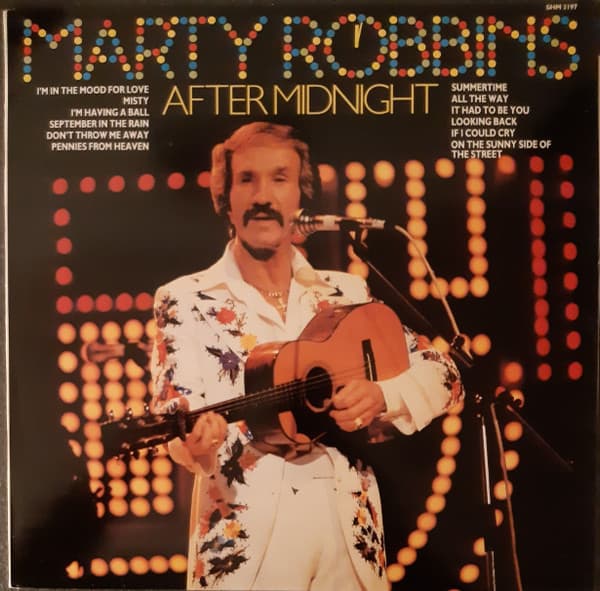
A gentle meditation on grace arriving quietly, one small coin of hope at a time
Released in 1956 on the album The Song of Robbins, Pennies from Heaven sits within Marty Robbins early catalog as a reflective interpretation rather than a chart driven statement. The recording did not emerge as a pop or country chart single upon release, yet its placement on an album devoted to time honored standards reveals Robbins at a formative crossroads. This was an artist already known for his smooth baritone and narrative instincts, choosing restraint over spectacle and intimacy over ambition.
Originally written in 1936 by Johnny Burke and Arthur Johnston, Pennies from Heaven arrived in the American songbook during an era defined by economic hardship and cautious optimism. By the time Marty Robbins approached it two decades later, the song had already lived many lives. What Robbins offers is not reinvention but clarification. He strips the composition of theatrical flourish and repositions it as a quiet confession. In his hands, the lyric becomes less about sudden fortune and more about earned perspective.
Robbins sings as though he has learned, perhaps slowly and at cost, that hope rarely announces itself. The central metaphor of pennies falling from the sky is delivered without irony. It is not naïve, but patient. The arrangement mirrors this philosophy. Light orchestration supports rather than leads, allowing the melody to breathe and the vocal phrasing to linger. Robbins understands silence as a musical tool. Each pause suggests reflection, as if the singer is weighing every word before letting it go.
What elevates this performance is its emotional economy. Robbins does not plead, nor does he dramatize. Instead, he presents acceptance as a form of wisdom. The lyric’s acknowledgment that storms must pass before blessings appear resonates deeply within Robbins’ broader body of work, which so often explores endurance, loss, and quiet resolve. Even without a narrative storyline, Pennies from Heaven feels autobiographical in spirit. It sounds like a man speaking from lived experience rather than borrowed sentiment.
Within The Song of Robbins, this track serves as a philosophical anchor. Surrounded by classic material, it reinforces Robbins’ respect for songwriting craft and emotional honesty. He treats the American standard not as a relic but as a living conversation, one that still speaks to postwar audiences searching for stability and meaning.
The legacy of Pennies from Heaven in Robbins’ catalog is subtle but enduring. It reminds listeners that some of the most lasting performances are not defined by chart numbers or radio saturation. They endure because they articulate truths that age well. Robbins’ interpretation suggests that hope is rarely abundant or dramatic. More often, it arrives quietly, in small increments, asking only that one notice and believe.
In that sense, this recording stands as an understated testament to Marty Robbins artistry. It is not a song about miracles. It is a song about recognition. And that, perhaps, is why it continues to resonate long after the last note fades.