
A fleeting glimpse of beauty becomes a timeless meditation on loneliness, longing, and the fragile hope of connection.
When Roy Orbison released “Oh, Pretty Woman” in 1964, the song didn’t merely climb the charts—it conquered them. The single surged to No. 1 on the Billboard Hot 100 and quickly became one of the defining records of the decade. Appearing on the Oh, Pretty Woman album the following year, the track captured Orbison at a moment when his distinctive blend of operatic vulnerability and rock-and-roll pulse had already reshaped the soundscape of popular music. By the time Roy Orbison performed it during the Monument Concert in 1965, the song had already solidified itself as a cultural landmark—instantly recognizable from its opening guitar riff, yet far deeper than the casual swagger its title might suggest.
The genesis of “Oh, Pretty Woman” is refreshingly simple yet almost mythic in the way great pop songs often are. Co-written by Roy Orbison and his frequent collaborator Bill Dees, the inspiration reportedly came from a passing moment—Orbison’s wife walking out the door while Dees joked about pretty women passing by the window. What began as an offhand remark blossomed into a composition that captured the universal drama of a stranger’s glance: attraction mingled with the quiet ache of distance.
Musically, the song is built on one of the most iconic guitar figures in rock history. That descending riff—played with deliberate confidence—sets the stage before Orbison’s voice enters, equal parts bravado and yearning. Unlike many rock singers of the era who leaned into rebellious charisma, Roy Orbison possessed a voice that seemed almost orchestral in its emotional reach. In “Oh, Pretty Woman,” he moves from playful admiration to self-doubt within a matter of lines. The narrator begins with bold appreciation—“Pretty woman, walking down the street”—yet beneath the compliment lies a familiar insecurity: the sense that beauty is something that passes by, not something meant to stay.
That tension between desire and solitude has always been central to Orbison’s artistry. His songs often depict love as something glimpsed rather than possessed, a dream hovering just out of reach. “Oh, Pretty Woman” appears lighter than his famously tragic ballads like “Crying” or “Running Scared,” but its emotional structure is remarkably similar. The singer watches, wonders, and assumes the worst—until the final twist, when the “pretty woman” turns around. It’s a small narrative gesture, yet it transforms the entire emotional arc of the song: hope interrupts loneliness.
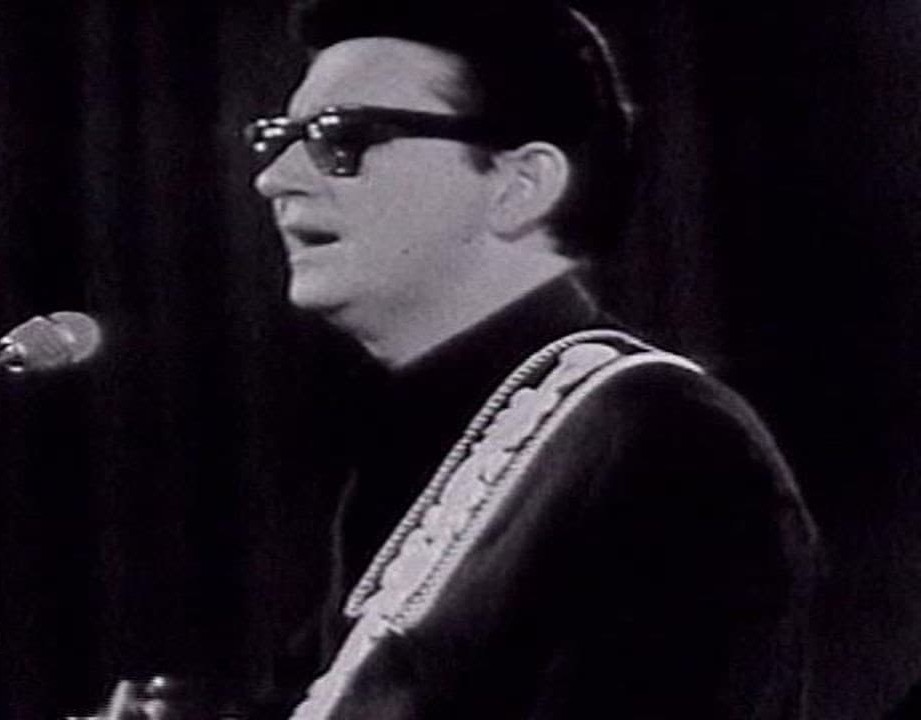
The 1965 Monument Concert performance adds another dimension. On stage, Roy Orbison—stoic behind his dark glasses—delivers the song with a controlled intensity that emphasizes its rhythmic drive while preserving the fragile humanity at its core. The crowd hears the swagger of rock-and-roll, but the attentive listener hears something else entirely: the voice of a man who understands that every passing stranger carries the possibility of connection.
More than sixty years later, “Oh, Pretty Woman” remains a pillar of the rock canon. Its riff still sparks instant recognition, but its deeper power lies in how it distills a universal human experience—the moment when admiration, uncertainty, and hope collide in the brief space between two people crossing paths on a street. In that fleeting encounter, Roy Orbison found a melody that would echo across generations.