
A Voice From Another America Drifted Into Hazzard County and Turned a Television Gag Into Something Timeless
When Roy Orbison appeared on The Dukes of Hazzard in March 1981, he was not introducing a new single or promoting a chart campaign. He was carrying the weight of a song that had already become part of American mythology. “Oh, Pretty Woman”, his towering 1964 hit that reached No. 1 on the Billboard Hot 100, had long since escaped the boundaries of radio and entered the bloodstream of popular culture. By the time Orbison performed it on the television series, the song already stood as one of the defining recordings of the rock and roll era. Originally associated with the album Oh, Pretty Woman, the track had become inseparable from the haunting mystique of Roy Orbison himself, a man whose voice always seemed suspended somewhere between heartbreak and transcendence.
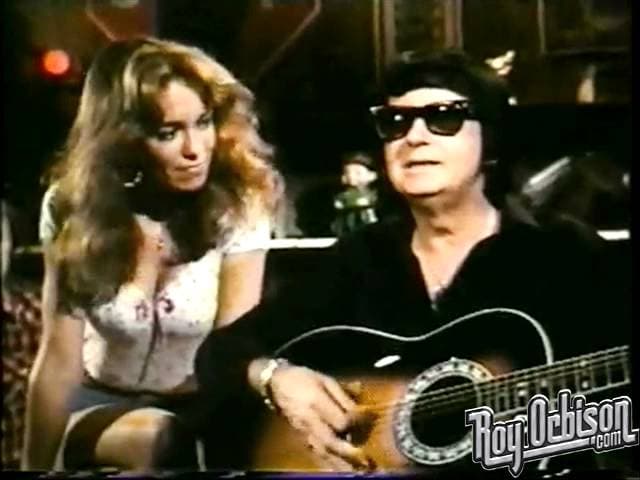
The appearance itself was almost absurd in premise, which made it unforgettable. In classic Dukes of Hazzard fashion, Orbison was pulled over in Boss Hogg’s notorious “celebrity speed trap” and forced to perform at the Boar’s Nest to settle the fine. On paper, it sounds like little more than television novelty. Yet the moment Orbison begins to sing, the comedy falls away. The room changes. Even decades later, the footage still carries the strange electricity that followed him throughout his career.
That was always the paradox of Roy Orbison. He looked unlike the swaggering rock stars around him. Black clothes. Dark glasses. Motionless posture. He rarely moved like Elvis or strutted like the British Invasion figures who soon dominated the decade. Instead, he stood almost completely still and allowed the voice to carry the emotional violence. And that voice was enormous. Operatic without sounding theatrical. Fragile without sounding weak.
By 1981, Orbison’s commercial peak was behind him, but his legend was quietly rebuilding. His appearance on network television arrived during a period when America was beginning to rediscover the emotional sophistication hidden inside his music. Younger audiences knew the humor and car chases of The Dukes of Hazzard, but Orbison brought something heavier into that world: loneliness, yearning, adult vulnerability. He did not sing like a man trying to impress a crowd. He sang like someone confessing a private ache in public.
What makes “Oh, Pretty Woman” endure is that beneath its famous riff lies a profound tension between desire and distance. Most listeners remember the swagger of the opening guitar line, but Orbison’s phrasing tells another story entirely. There is excitement in the song, yet also uncertainty. The narrator is captivated, almost overwhelmed, by the passing figure he sees. The performance balances masculine confidence with emotional exposure, a combination Orbison mastered better than nearly anyone of his era.
Watching him perform the song inside the exaggerated world of Hazzard County creates an unexpected contrast. Around him is broad television comedy, yet Orbison remains completely sincere. He never winks at the audience. He never treats the material as nostalgia. That sincerity is precisely why the scene survived long after countless other celebrity cameos faded from memory.
For many viewers, that brief appearance became an accidental introduction to one of America’s most emotionally complex artists. Long before the resurgence that would come with the Traveling Wilburys and Mystery Girl, Orbison was already reminding audiences of something essential: great songs do not age when they are built on recognizable human feeling. They simply wait for another generation to hear them again.