
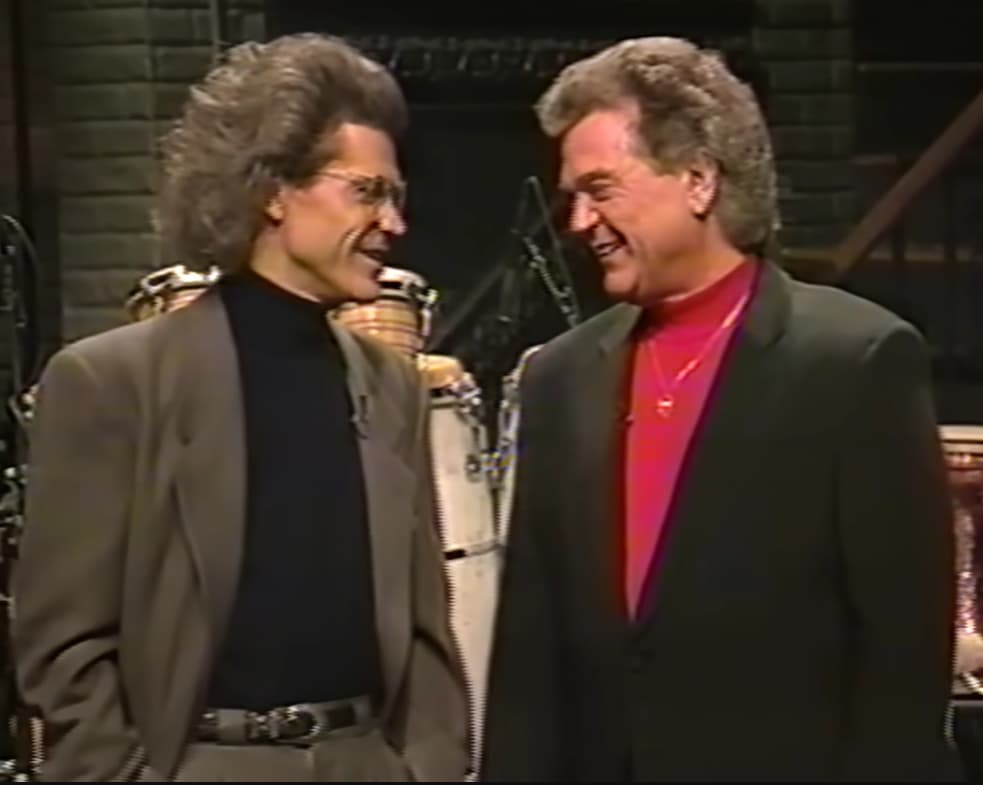
A voice suspended between longing and illusion, where love feels real even as it slips away
When Conway Twitty released It’s Only Make Believe in 1958, the song did not merely climb the charts, it conquered them, reaching No. 1 on both the Billboard Hot 100 and the UK Singles Chart. Issued as a standalone single rather than tied to an original studio album, it became the defining breakthrough of Twitty’s early career, marking his transition from a hopeful rock and roll performer into a vocalist capable of immense emotional depth and global resonance.
At its core, It’s Only Make Believe is a masterclass in emotional tension. Written by Twitty and drummer Jack Nance, the song captures a fragile psychological space where love exists, but only in one heart. The narrator clings to the illusion of a relationship, projecting intimacy where none truly remains. It is not heartbreak in its loudest or most dramatic form. Instead, it is quiet, internal, and deeply human. The pain comes not from rejection alone, but from the realization that what once felt mutual has become one-sided, sustained only by memory and desire.
What elevates the song beyond its lyrical premise is Twitty’s extraordinary vocal performance. His delivery begins with restraint, almost conversational, before gradually building into a soaring, operatic crescendo. This dynamic arc mirrors the emotional unraveling of the narrator. Each rising note feels less like a technical flourish and more like a crack in the façade, until the illusion can no longer hold. The climactic high notes, for which the recording is justly famous, are not simply displays of range. They are expressions of desperation, of a man reaching beyond reality to grasp something already lost.
Musically, the arrangement reflects the transitional moment in which it was created. Rooted in the structures of 1950s pop and rock and roll, it carries an undercurrent of country sentimentality that would later define much of Conway Twitty’s career. The steady rhythm and clean instrumentation provide a stable foundation, allowing the emotional volatility of the vocal to take center stage. It is a delicate balance, one that ensures the song never collapses into melodrama despite its intense subject matter.
Culturally, It’s Only Make Believe stands as a bridge between eras. It emerged at a time when rock and roll was still finding its emotional vocabulary, and it expanded that vocabulary by introducing a deeper, more introspective form of expression. Twitty would go on to become a towering figure in country music, but this recording captures him at a pivotal crossroads, where genre boundaries blur and raw feeling takes precedence over stylistic identity.
Decades later, the song endures because its central truth remains unchanged. The idea that love can persist in the mind long after it has vanished in reality is one of the most universal human experiences. In It’s Only Make Believe, that experience is given a voice, trembling, powerful, and unforgettable.