
A Night When Rock and Roll Became an Act of Memory, Brotherhood, and Survival
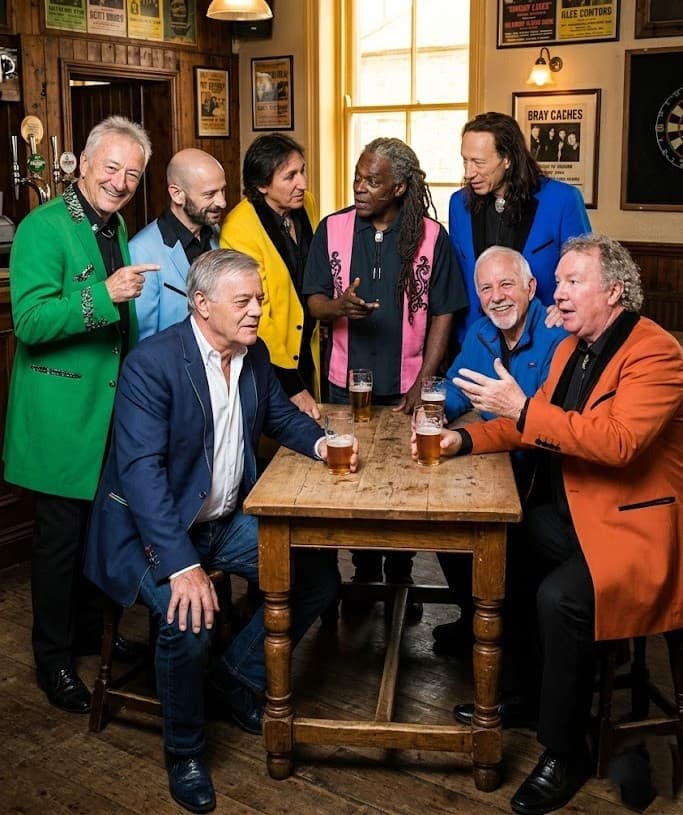
On August 10, 2008, in Dagenham, England, Tony Blackburn, Showaddywaddy, and David Essex shared the stage for the Rock and Roll Charity Concert, an event that carried less the ambition of chart conquest than the preservation of a musical spirit that had already reshaped generations. Unlike the tightly packaged commercial singles that once battled weekly across the UK charts, this performance belonged to a different tradition entirely: the reunion concert as living archive. Yet the names involved were inseparable from British chart history. David Essex, whose 1973 single “Rock On” reached No. 3 on the UK Singles Chart and later crossed into international success, brought with him the restless glamour of 1970s pop-rock theater. Showaddywaddy, one of Britain’s defining revivalist acts, had already secured a remarkable string of Top 10 hits throughout the 1970s with songs such as “Under the Moon of Love” and “Three Steps to Heaven.” And Tony Blackburn, long celebrated as one of the most recognizable voices in British broadcasting, represented the bridge between the radio age and the enduring mythology of early rock and roll itself.
What made the Dagenham concert resonate was not novelty, but continuity. By 2008, rock and roll had long ceased to be rebellious in the way newspapers once feared it might be. The leather jackets had softened with age, the screaming teenage audiences had become parents and grandparents, and the songs themselves had migrated from jukeboxes to memory. But that is precisely why events like this matter. They reveal that classic rock was never sustained solely by youth culture. It endured because the music contained emotional truths simple enough to survive fashion and powerful enough to outlive their own era.
In performances associated with this concert, one can sense a profound tenderness beneath the celebratory energy. Showaddywaddy always understood that nostalgia works best when it remains joyful rather than mournful. Their music never attempted to modernize rock and roll; instead, it lovingly restored it, polishing the chrome until audiences could once again see themselves reflected inside the old melodies. Their harmonies and revivalist arrangements acted almost like preservation work on a cathedral wall, protecting the emotional architecture of the 1950s and early 1960s from disappearance.
David Essex, meanwhile, carried a different emotional current. Where revival acts often celebrated innocence, Essex frequently brought vulnerability and introspection into glam-era rock performance. Songs like “Rock On” were never merely retro exercises; they were meditations on fame, alienation, and the strange loneliness hiding beneath public spectacle. His presence at a charity concert added another layer to the evening’s emotional weight. Artists who once dominated radio waves now stood together not as competitors, but as custodians of shared memory.
The phrase “charity concert” can sometimes sound administrative, almost secondary to the music itself. Yet in the history of rock and roll, charity performances often expose the genre’s deepest humanity. Rock music has always thrived on collective feeling: packed dance halls, communal choruses, strangers singing the same lines as though they belonged to a single life story. A charity event transforms that emotional communion into direct action. The performance becomes more than entertainment; it becomes proof that music can still gather people around compassion rather than commerce.
The Dagenham performance also reflected something deeply British about rock nostalgia. In America, rock history is often mythologized through grand narratives of rebellion and stardom. In Britain, there is often a warmer intimacy to these revival gatherings — a sense that the artists and audience have grown older together. The applause is not merely for technical brilliance. It is applause for survival, for memory, for the endurance of songs that accompanied first dances, heartbreaks, weddings, late-night drives, and vanished summers.
That is the quiet beauty of the Rock and Roll Charity Concert. It was not trying to convince anyone that rock and roll was still young. Instead, it honored the far more difficult truth: that music ages alongside us, gathering emotional gravity with every passing decade. And when voices like David Essex or groups like Showaddywaddy return to the stage, they are not resurrecting the past. They are reminding audiences that the past never fully left.