
When love lingers in the wrong place, it becomes a quiet ache no distance can erase
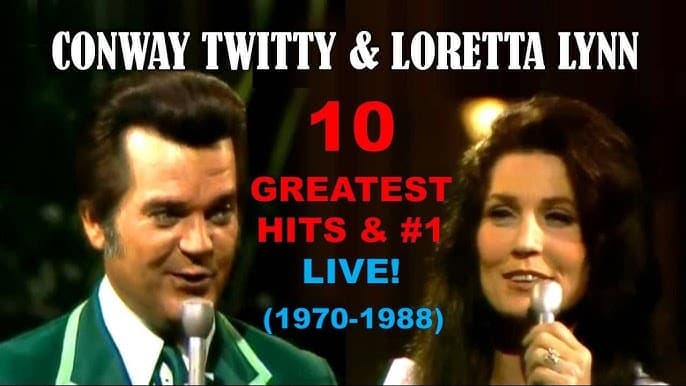
By the time Conway Twitty and Loretta Lynn recorded Love’s Not Where Love Should Be, their partnership had already become one of the most compelling dual voices in country music, a union defined by emotional authenticity and an uncanny conversational chemistry. Released as part of their collaborative work during the mid-1970s, the song found its place within an era when their duets consistently resonated with country audiences and performed strongly on the charts, reinforcing their status as the genre’s most trusted interpreters of love, regret, and human frailty.
There is a particular gravity to Love’s Not Where Love Should Be that separates it from more conventional duets. Rather than dramatizing conflict with overt confrontation, the song unfolds like a private reckoning. Twitty and Lynn do not argue so much as they reveal, line by line, the emotional dislocation of two people caught in circumstances they cannot easily escape. Their voices intertwine not as adversaries, but as witnesses to a shared truth neither can deny.
At its core, the song examines the moral and emotional tension of misplaced affection. Love, in this narrative, is not absent. It is present, but tragically misaligned. That distinction is crucial. Many country songs speak of heartbreak through separation or betrayal, but here the pain comes from recognition. The realization that love exists where it should not, and perhaps does not exist where it should, creates a subtle but devastating emotional paradox.
Musically, the arrangement supports this tension with restraint. There is no excess instrumentation to distract from the lyrical weight. Instead, the production allows space for silence, for hesitation, for the small pauses that give the song its sense of realism. Conway Twitty’s smooth, controlled delivery provides a steady emotional anchor, while Loretta Lynn brings a sharper, more immediate vulnerability. Together, they form a balance that feels less like performance and more like lived experience.
What makes this duet particularly enduring is the way it resists resolution. There is no clear redemption, no definitive ending that restores order. The song lingers in ambiguity, much like the situations it portrays. This was a hallmark of the Twitty-Lynn collaborations. They trusted the listener to sit with discomfort, to recognize that not all emotional conflicts can be neatly resolved within three minutes.
In the broader context of their catalog, Love’s Not Where Love Should Be stands as a testament to their ability to elevate everyday emotional dilemmas into something quietly profound. Their partnership was never about spectacle. It was about truth, delivered plainly, with just enough musical framing to let that truth resonate.
Listening now, decades removed from its release, the song retains its power because its central question remains unresolved in human experience. What happens when the heart chooses a path the world cannot accept, or worse, one it cannot sustain. In that unresolved space, Conway Twitty and Loretta Lynn found some of their most honest work, and Love’s Not Where Love Should Be endures as one of its most intimate reflections.