
A Farewell Wrapped in Velvet Voices and Unfinished Longing
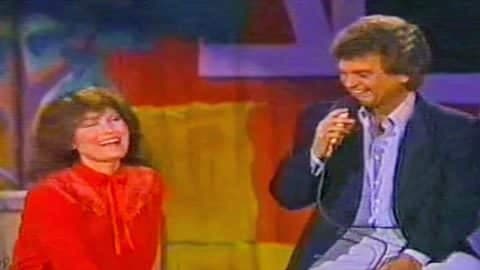
When Conway Twitty and Loretta Lynn stepped onto the stage to perform “Hello Darlin’ [Live]”, they were not merely revisiting one of country music’s defining heartbreak songs—they were reopening a wound that had never truly healed in the genre’s collective memory. Originally released by Conway Twitty in 1970 on the album Hello Darlin’, the song became a monumental success, reaching No. 1 on the Billboard Hot Country Singles chart and remaining there for four weeks. It would go on to become Twitty’s signature recording, a performance so deeply tied to his identity that even decades later, the opening phrase alone still feels capable of silencing a room.
Yet in this live duet setting with Loretta Lynn, the song acquires a different gravity. The original studio version was intimate and solitary—a man confronting the ruins of a relationship with quiet dignity. But when Loretta enters the emotional space beside Conway, the performance transforms into something larger than heartbreak. It becomes dialogue. Memory. Regret given a second voice.
The genius of “Hello Darlin’” has never rested in lyrical complexity. In truth, its power comes from restraint. The opening greeting—softly spoken rather than sung—carries the weight of years. Conway Twitty understood that country music often lives not in grand declarations, but in pauses, hesitations, and the unbearable politeness people use when standing face-to-face with someone they once loved deeply. The song’s narrator does not beg dramatically. He does not rage. He simply admits that seeing her again has undone him. That emotional understatement is precisely what makes the performance devastating.
In the live rendition alongside Loretta Lynn, one hears two masters of emotional realism working with almost surgical precision. Loretta’s presence softens the loneliness embedded in the original recording, yet paradoxically deepens its sadness. Her voice carries warmth and resilience, qualities that made her one of country music’s most human storytellers. Against Conway’s velvet baritone, she becomes both witness and echo—almost like the memory the narrator cannot escape.
The arrangement itself remains faithful to classic Nashville craftsmanship: slow tempo, restrained instrumentation, steel guitar sighs drifting beneath the melody like distant recollections. Nothing is hurried. Every phrase is allowed to breathe. That patience is part of why the song has endured while so many hits from its era faded into nostalgia. “Hello Darlin’” does not chase trends. It speaks to the timeless humiliation of still loving someone after pride insists you should have moved on.
There is also something profoundly theatrical about Conway Twitty’s delivery. He sang as though he were leaning across the table directly toward the listener, never performing above them. Few artists possessed his ability to make vulnerability sound masculine rather than fragile. In country music history, that balance is rare. Many singers could sound tough. Others could sound wounded. Conway sounded honest.
The cultural legacy of “Hello Darlin’” extends far beyond its chart success. It became a cornerstone of traditional country storytelling during a period when the genre was increasingly balancing polished commercial production with emotional authenticity. The song remains one of the clearest examples of how simplicity, when delivered with conviction, can outlive complexity.
And perhaps that is why this live duet still resonates so deeply. Two legendary voices stand together, revisiting a song already immortalized by time, and somehow uncover new sorrow within it. Not louder sorrow. Not dramatic sorrow. Just the quiet realization that some loves never truly leave the room, even after the music ends.