
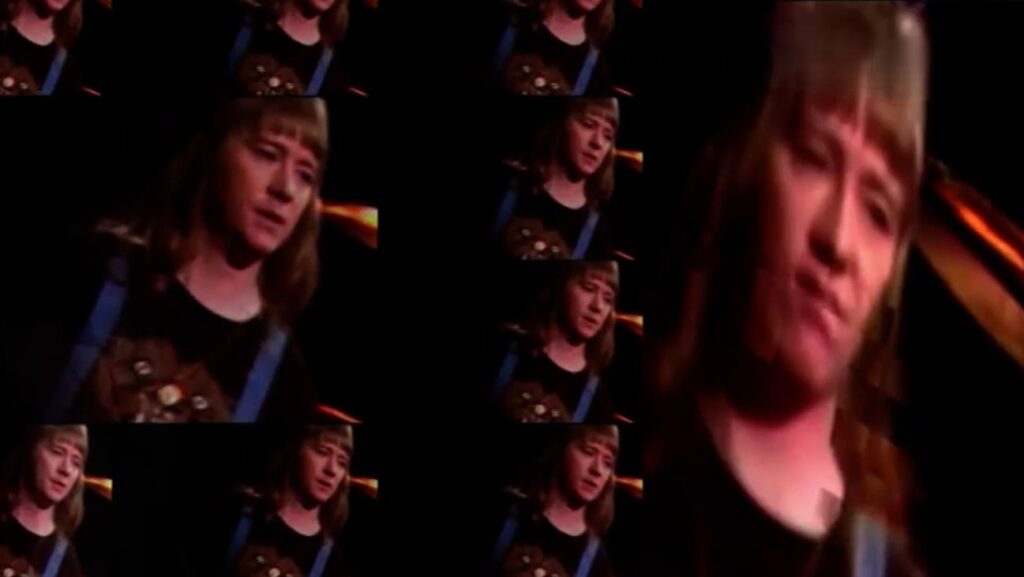
A Voice Once Draped in Glitter Rock Returned Here Wearing the Shadows of Survival
When Brian Connolly, the unmistakable former frontman of Sweet, released “Hypnotized” in 1982, it arrived not as a triumphant chart conquest, but as something far more revealing: the sound of a wounded rock star refusing to disappear quietly. Issued through Carrere Records and distributed across Europe by RCA, the single ultimately failed to chart, yet its commercial silence has long obscured the emotional weight it carried within Connolly’s post-Sweet years. Later preserved on the retrospective collection Take Away the Music, the recording now stands as one of the most fascinating fragments from a singer caught between fading glam mythology and personal reinvention.
By 1982, the golden age of glam rock had already receded into memory. The extravagant stomp of Sweet — all platform boots, razor harmonies, and thunderous choruses — belonged to another decade. Punk had detonated the old order. New Wave had redrawn the landscape. Yet Connolly’s voice still carried the bruised theatricality that once turned songs like “Love Is Like Oxygen” and “Fox on the Run” into anthems of youthful excess. What makes “Hypnotized” so compelling is not merely the song itself, but the context surrounding the man singing it.
The track was originally written by Joe Lynn Turner and first recorded by Turner’s band Fandango, but Connolly transformed it into something colder and more haunted. His interpretation strips away any sense of carefree hard-rock swagger and replaces it with fatigue, obsession, and emotional dependency. The title alone becomes layered with meaning when heard through the lens of Connolly’s own life during this era — a period marked by professional uncertainty, deteriorating health, and the lingering aftershocks of fame.
There is a distinctly early-1980s atmosphere embedded in the production: hard-edged guitars, polished arena-rock textures, and a rhythmic drive that reflects the transitional state of rock music at the time. Yet the true center of gravity remains Connolly’s voice. It no longer possesses the youthful glitter of the mid-1970s. Instead, it sounds weathered, frayed around the edges, but deeply human. That vulnerability gives the performance its lasting power. Many singers lose technical precision with age or hardship; Connolly gained emotional texture.
Listening now, “Hypnotized” feels less like a commercial single and more like a document of endurance. The song captures an artist trying to exist outside the enormous shadow of his former band while still carrying every scar that fame left behind. There is an aching duality throughout the recording: the desire to move forward colliding constantly with the impossibility of escaping the past.
In retrospect, that tension is precisely what makes the record memorable. It belongs to a forgotten category of rock singles — songs released after the spotlight had moved elsewhere, when artists were no longer protected by trends, massive promotion, or cultural momentum. What remained was character. Presence. Truth.