
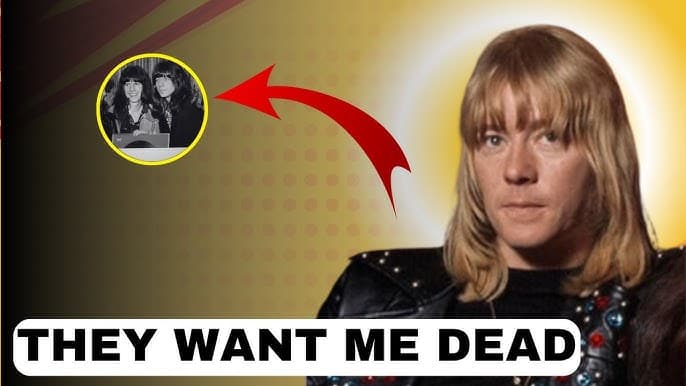
A Voice Once Built for Glitter and Chaos, Now Singing Through the Weight of Time
By the time Brian Connolly’s Sweet arrived in Esbjerg in 1991, the mythology surrounding Sweet had already been carved deep into the history of British glam rock. The band that once stormed international charts with singles like “Ballroom Blitz”, “Fox on the Run”, and “Love Is Like Oxygen” had long since passed its commercial peak, yet the shadow of those records still lingered heavily over every stage Connolly stepped onto. Albums such as Desolation Boulevard and Sweet Fanny Adams had transformed the group from glitter-pop provocateurs into one of the most unexpectedly muscular rock acts of the 1970s. But Esbjerg was not about chart positions anymore. It was about survival, memory, and the stubborn endurance of a voice that refused to disappear quietly.
There is something profoundly moving about footage from these later European performances. Not because they recreate the polished spectacle of Sweet’s prime, but because they reveal what remains after fame has stripped itself bare. Connolly no longer stood before audiences as the untouchable blond idol of glam rock television. By 1991, he carried visible signs of exhaustion and hard living, yet the emotional force behind the music had gained something deeper than youthful swagger. The songs sounded less like celebrations and more like echoes from another lifetime.
That transformation gives performances from this era an unusual gravity. In the early 1970s, Sweet’s music thrived on excess: stomping rhythms, towering harmonies, outrageous costumes, and hooks sharp enough to shake arenas. Their records often hid remarkable craftsmanship beneath all the glitter. Mike Chapman and Nicky Chinn provided the architecture, but Connolly’s voice supplied the danger. There was always tension in his delivery, a roughness pushing against the sweetness of the melodies. Even in the band’s biggest hits, there was an undercurrent of desperation that separated Sweet from many of their glam contemporaries.
By the time of Esbjerg 1991, that desperation had become painfully real.
Connolly’s later performances are difficult to watch without understanding the personal cost behind them. Years of alcohol abuse had damaged both his health and his once-commanding vocal power. Yet there is dignity in the way he continued touring across Europe during the late 1980s and early 1990s. These concerts were not driven by nostalgia alone. They were acts of persistence. Every appearance felt like an artist attempting to hold onto the fragments of identity that fame had both created and destroyed.
And perhaps that is why audiences continued to gather.
They were no longer simply hearing old glam rock anthems. They were witnessing a living document of rock history. Connolly represented an era when British pop embraced theatricality without apology, when heavy guitars and pop choruses could coexist in perfect, rebellious balance. Sweet helped lay groundwork that later generations of hard rock and hair metal bands would borrow endlessly, often without acknowledging the source.
In Esbjerg, the spectacle had faded, but the humanity had sharpened. What remained was not the illusion of eternal youth, but something rarer: a performer standing inside the ruins of his own legend, still singing anyway.