
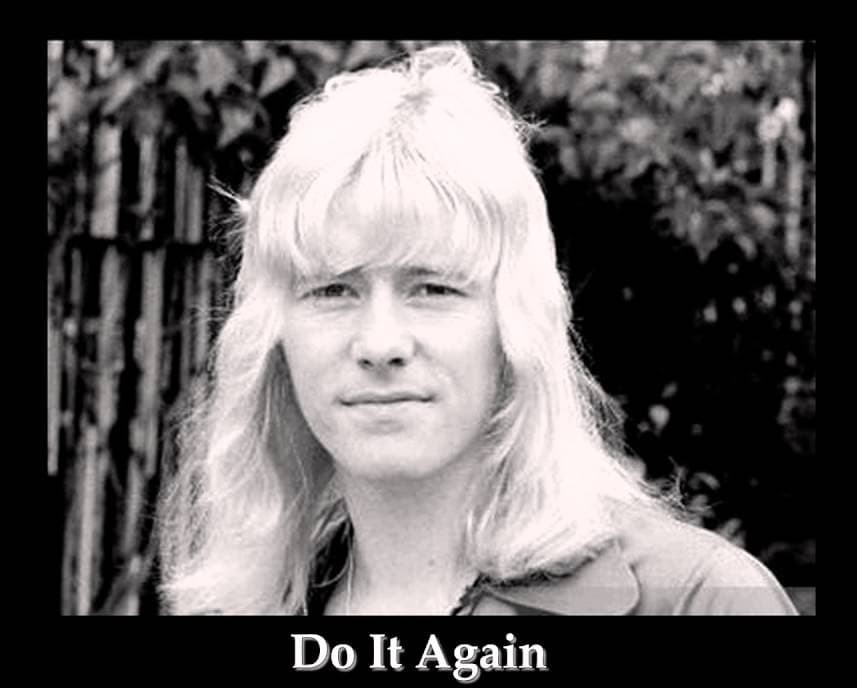
A Song About Returning to the Fire Even After It Burns You
When Brian Connolly released “Do It Again” as part of the album Let’s Go, the record arrived far from the glittering commercial heights that had once defined Sweet in the early 1970s. It was not a major charting single, nor was it designed to be. By the mid 1990s, Connolly was no longer chasing the explosive hysteria of “Ballroom Blitz” or “Fox on the Run.” Instead, he sounded like a man staring directly into the wreckage of memory, singing not for spectacle but for survival. That difference gives “Do It Again” its peculiar emotional gravity.
The song itself is deceptively simple. On paper, its lyrics revolve around a toxic cycle of love and emotional damage. But beneath that surface lies something more revealing: resignation dressed as devotion. Connolly sings about returning to pain almost willingly, embracing the repetition of heartbreak because the alternative, emotional emptiness, feels even colder. “A love that’s bad is better than none” becomes the song’s central wound. It is not presented as wisdom. It sounds more like confession.
That tension is what makes the recording linger long after it ends.
Musically, the track carries traces of the melodic accessibility that once made Sweet masters of glam rock hooks, yet the performance is stripped of youthful swagger. Connolly’s voice, weathered by years of personal and physical hardship, no longer reaches for perfection. Instead, it carries fragility. Every line feels slightly frayed at the edges, and that imperfection becomes the emotional engine of the song. Many singers spend careers trying to hide vulnerability inside technique. Connolly does the opposite here. He allows exhaustion to remain audible.
For listeners familiar with his history, that matters enormously.
By the time “Do It Again” appeared, Brian Connolly had already lived through the collapse of Sweet’s classic lineup, severe health struggles, and years of instability that often overshadowed his legacy. In that context, the song almost feels autobiographical, even if it was not written specifically as one. The idea of repeating destructive patterns, returning to situations that hurt because they are familiar, mirrors the trajectory of many aging rock musicians who survived fame only to discover that nostalgia can become its own kind of trap.
Yet the song never collapses into self-pity.
What gives “Do It Again” its lasting emotional resonance is its honesty about human weakness. Connolly does not try to present himself as redeemed or healed. He simply acknowledges how difficult it is to walk away from the things that damage us, especially when those same things once gave our lives intensity, meaning, or identity. That theme extends far beyond romance. It speaks to addiction, memory, fame, and even the strange relationship artists have with the past versions of themselves they can never fully escape.
For longtime admirers of Brian Connolly, the recording stands as something more intimate than a comeback song. It is the sound of a survivor still singing through the cracks.