
A Night When Glam Rock Shed Its Glitter and Revealed Its Soul
By August 1975, Slade were standing at a peculiar crossroads in rock history. The Birmingham quartet had already conquered Britain with six U.K. No. 1 singles and an astonishing run of chart success between 1971 and 1974, yet America still regarded them as outsiders—too loud for pop, too unruly for polished arena rock, too proudly working-class to fit the mythology that surrounded many of their contemporaries. And yet, inside San Francisco’s legendary Winterland Ballroom on August 4, 1975, captured in Slade – Full Concert – 08/04/75 – Winterland (OFFICIAL), the band delivered something that now feels far more important than chart positions: proof that great rock and roll survives long after trends begin to fade.
This performance arrived during the era surrounding Slade in Flame, the soundtrack album tied to the band’s critically admired feature film Flame. While the record itself did not replicate the explosive commercial dominance of earlier Slade releases, it revealed a deeper and more reflective side of the group. Songs such as “How Does It Feel?” had already begun to move beyond the football-chant energy that made Slade famous, replacing pure swagger with melancholy, longing, and emotional fatigue. Winterland captured that transition in real time.
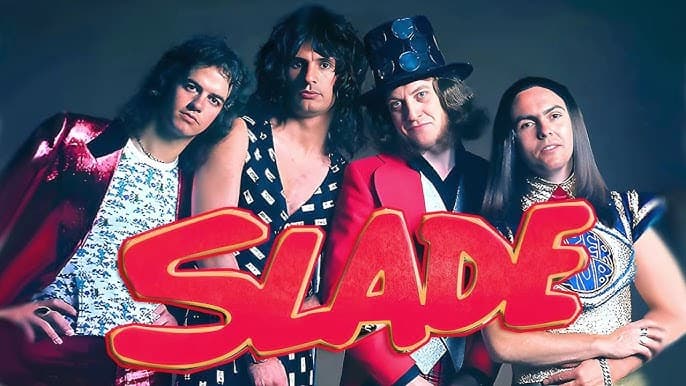
What makes this concert extraordinary is not simply the setlist—it is the atmosphere of endurance surrounding it. By 1975, glam rock was beginning to fracture. The glitter had dimmed. Punk was waiting impatiently in the wings. Yet Noddy Holder, with that unmistakable sandpaper roar, still sang as though every chorus had to reach the back wall of the hall or die trying. Dave Hill looked like a carnival explosion in platform boots and metallic chaos, while Jim Lea quietly anchored the music with a musician’s discipline often overlooked in discussions of Slade’s image. Together, they sounded less like a novelty act and more like a barroom soul band that had wandered into the wrong decade and accidentally invented arena rock.
The emotional center of the performance may well be “How Does It Feel?”—a song that strips away Slade’s usual boisterous grin and exposes exhaustion beneath fame. In many ways, it is one of the great forgotten ballads of the 1970s. The lyrics do not celebrate success; they question its emotional cost. When Holder sings with aching restraint rather than brute-force bravado, the audience hears a man confronting emptiness behind applause. That tension gives the Winterland show its lasting gravity.
Then there is the sheer physicality of the concert itself. “Get Down and Get With It” and “Mama Weer All Crazee Now” erupt not as polished performances, but as communal detonations. Slade understood something many technically superior bands never grasped: rock music is not always about perfection—it is about release. Their concerts felt dangerous because they sounded barely containable, as though the songs could collapse under their own momentum at any second.
Decades later, this Winterland recording stands as more than archival footage. It is evidence of a band refusing to soften itself for acceptance. Long before American hard rock absorbed their DNA through groups like Quiet Riot and even KISS, Slade had already perfected the language of loud joy, bruised vulnerability, and working-class defiance. Winterland simply preserved the moment when all of it burned brightest.