
A seasoned love built on fragile harmony, where even happiness feels like something to protect
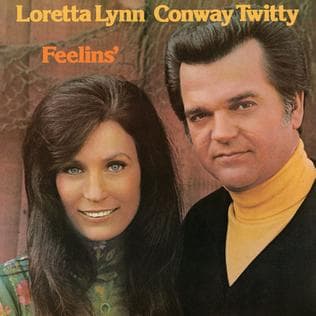
In 1974, Conway Twitty and Loretta Lynn returned to the upper ranks of the Billboard Hot Country Singles chart with Don’t Mess Up a Good Thing, a duet that climbed to No. 5 and further cemented their status as country music’s most compelling vocal partnership. Featured on their collaborative album Country Partners, the song arrived at a moment when their artistic chemistry had already become legendary, yet it still managed to reveal new emotional textures within their shared narrative of love, conflict, and reconciliation.
At its core, Don’t Mess Up a Good Thing is not a grand declaration of romance, but something far more nuanced. It is a conversation. A negotiation. A quiet acknowledgment that love, once tested and rebuilt, carries a different kind of weight. Unlike the fiery confrontations that marked some of their earlier duets, this performance leans into restraint. The tension is still there, but it is tempered by experience, by the understanding that not every disagreement must end in collapse.
Originally written and recorded outside the country genre, the song found new resonance in the hands of Conway Twitty and Loretta Lynn. Their interpretation transforms it into something unmistakably rooted in the lived-in realities of long-term relationships. Twitty’s smooth, controlled delivery carries the voice of a man who knows he has something worth holding onto, while Lynn’s phrasing introduces both caution and quiet strength. Together, they construct a dialogue that feels authentic rather than theatrical.
Musically, the arrangement reflects the early 1970s Nashville sound in its mature phase. There is a measured elegance to the instrumentation. Nothing overwhelms the vocal interplay. Instead, the production allows space for subtle inflections, for pauses that speak as loudly as the lyrics themselves. This restraint becomes one of the song’s defining characteristics. It mirrors the emotional discipline required to preserve a relationship that has already weathered its share of storms.
What makes Don’t Mess Up a Good Thing endure is its emotional realism. It resists the temptation to idealize love. There are no sweeping promises or dramatic ultimatums. Instead, the song focuses on something more delicate. The recognition that happiness, once achieved, is not guaranteed to last without care. In this sense, it speaks to a more mature audience, those who understand that the greatest challenge is not falling in love, but sustaining it.
Within the broader legacy of Conway Twitty and Loretta Lynn, this track occupies a significant space. It reflects a period where their duets evolved beyond simple storytelling into deeper emotional exploration. They were no longer just portraying characters. They were embodying the complexities of real relationships, with all their compromises and quiet victories.
Listening now, decades removed from its original release, Don’t Mess Up a Good Thing feels less like a product of its time and more like a timeless reflection on human connection. It reminds us that sometimes the most powerful statement in love is not passion, but preservation.