
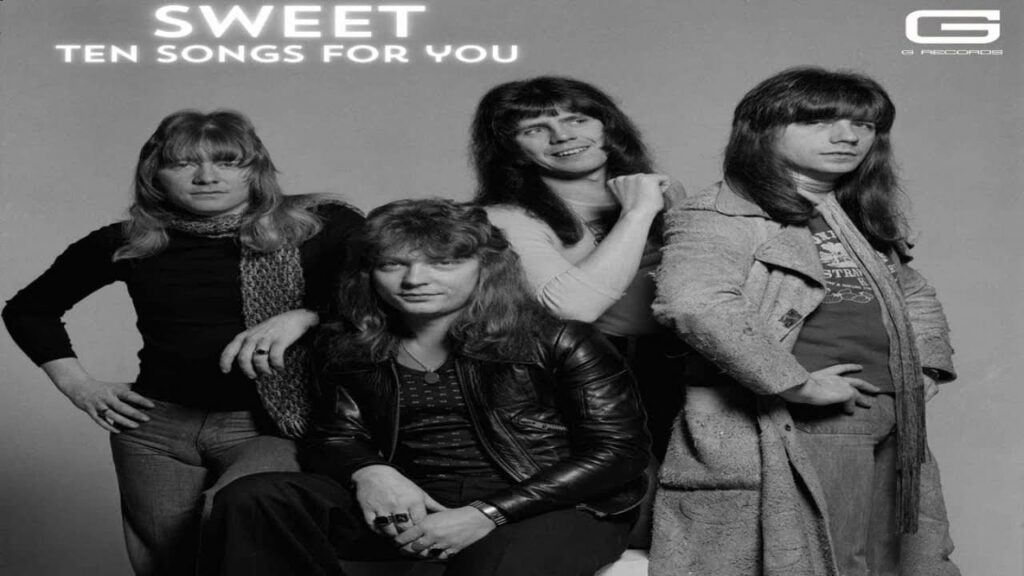
A Generation Caught Between Glitter and Rebellion Found Its Anthem Here
When Sweet released Teenage Rampage in January 1974, the group was already standing at the volatile center of glam rock’s explosion. The single stormed to No. 2 on the UK Singles Chart and later became part of Desolation Boulevard, an album that revealed a heavier and more aggressive side of the band beneath the glitter and platform boots. At a time when many critics still dismissed glam rock as disposable spectacle, “Teenage Rampage” sounded like a warning flare fired into the night. It was loud, swaggering, unruly, and impossible to ignore.
What makes the song endure is not simply its explosive chorus or the unmistakable crunch of Andy Scott’s guitar. It is the strange tension running underneath the performance. Glam rock was often theatrical, but “Teenage Rampage” carried genuine menace. The song feels less like a celebration of youth than a portrait of a generation overflowing with nervous energy and frustration. There is movement everywhere in the record. The pounding drums, the gang vocals, the relentless forward momentum. Nothing sits still for even a second.
By 1974, Sweet were evolving beyond the bubblegum image that early hits had attached to them. Their collaboration with songwriters Nicky Chinn and Mike Chapman had already produced massive singles, yet “Teenage Rampage” pushed harder toward hard rock territory. You can hear the bridge between two eras inside the recording. One foot remains planted in glam’s flamboyant hooks, while the other steps toward the raw aggression that punk would soon unleash later in the decade.
The title itself carries remarkable weight. “Teenage Rampage” sounds chaotic, almost threatening, but the song never fully condemns its subjects. Instead, it captures the anxiety adults often projected onto youth culture during the seventies. Long hair, loud music, crowded clubs, restless kids filling the streets after dark. To older generations, it looked like disorder. To young listeners, it felt like freedom. The brilliance of the song is that it understands both perspectives simultaneously.
Brian Connolly’s vocal performance deserves special attention because he never sings the track with detached coolness. There is desperation in his voice, almost as though he is trying to outrun something. That emotional urgency elevates the song far above novelty rock. Beneath the stomping rhythm lies a portrait of identity itself, of young people trying to carve out space in a society that increasingly viewed them as noise.
The promotional clips and television appearances surrounding the song only deepened its mythology. Glitter makeup, towering amplifiers, synchronized chaos, and screaming audiences transformed Sweet into symbols of a decade intoxicated with excess and rebellion. Yet revisiting “Teenage Rampage” today reveals something unexpectedly human beneath the spectacle. The song is not merely about teenagers causing trouble. It is about the eternal fear that youth cannot be controlled once it discovers its own voice.
More than fifty years later, the record still sounds alive because every generation eventually creates its own version of a teenage rampage. That is why the song never truly ages. It simply waits for the next restless crowd to claim it again.